Reading
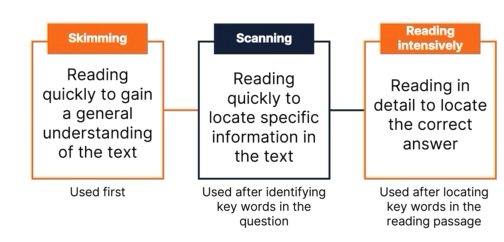
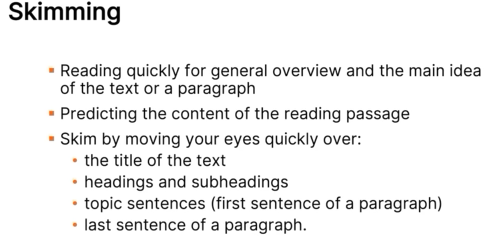
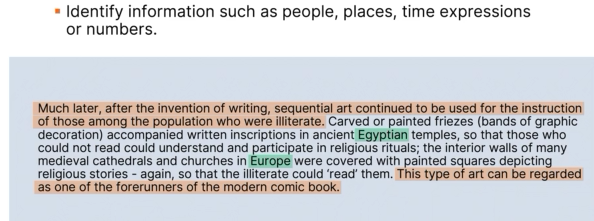
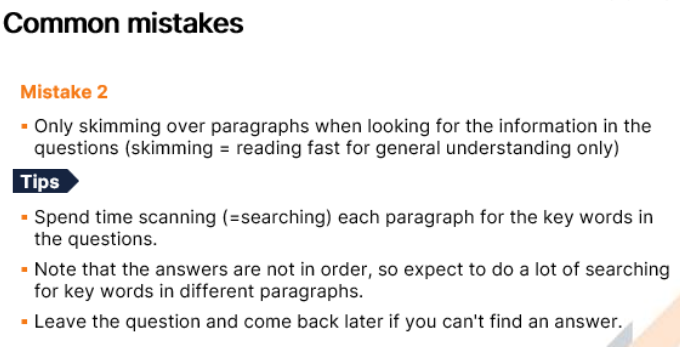
1. Skimming
List of key words to find information
- A reference to – Look in the paragraphs for a mention of something.
- A difference between – Look in the paragraphs for contrast words (e.g. however).
- A description of – Look in the paragraphs for features that can be described.
- An example of – Look in the paragraphs for examples that support an earlier point.
- A comparison of – Look in the paragraphs for words that show similarity (e.g. similarly, likewise, also).
- An explanation of – Look in the paragraphs for explanatory words (e.g. the reason for, this happens because).
- A reason for – Look in the paragraphs for words that express causation (e.g. due to, caused by).
- A cause of – Look in the paragraphs for words that express causation (e.g. due to, caused by, reason for).
- An effect of – Look in the paragraphs for effect or result words (e.g. impact, as a result, affect).
- An account of – Look for a story or description about what happened. Look for past simple verbs.
tip
Pay attention to singular and plural forms (e.g. a cause of or causes of). This will help you understand how many causes might be located within a paragraph.
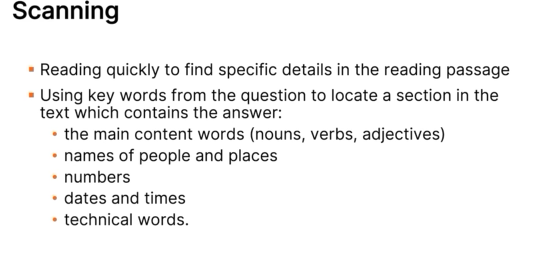
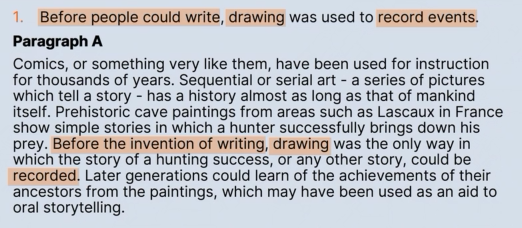
2. Scanning
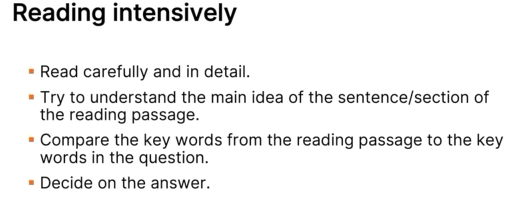
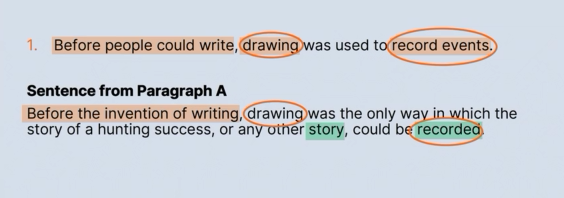
3. Reading intensively
Multiple Choice
Common Mistakes
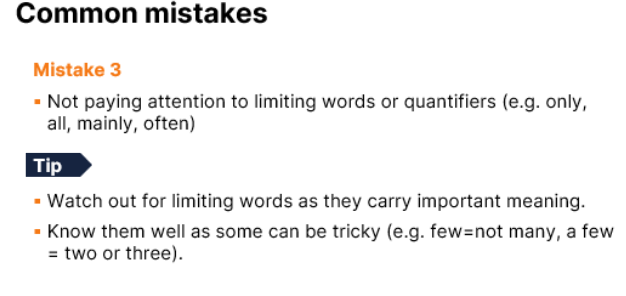
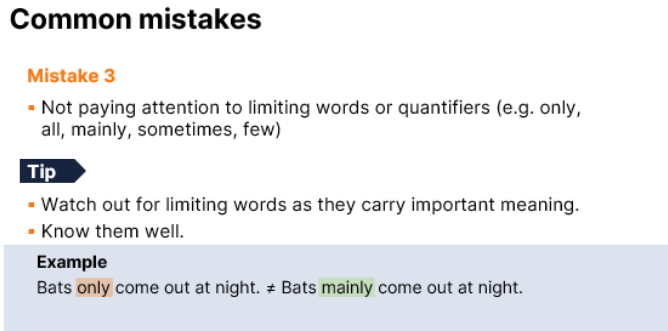
- few = not many
- a few = 2,3
- the few = elites
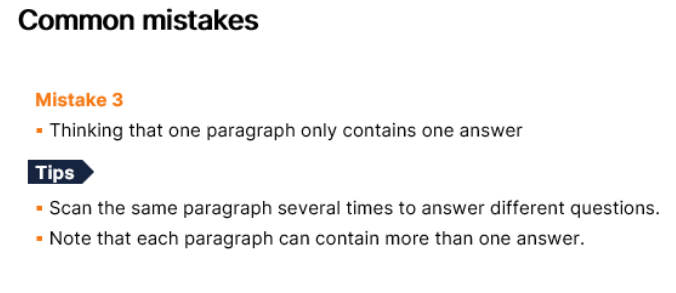
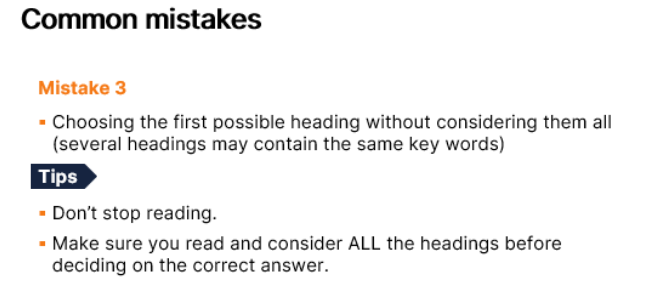
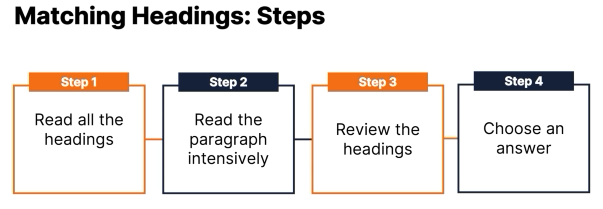
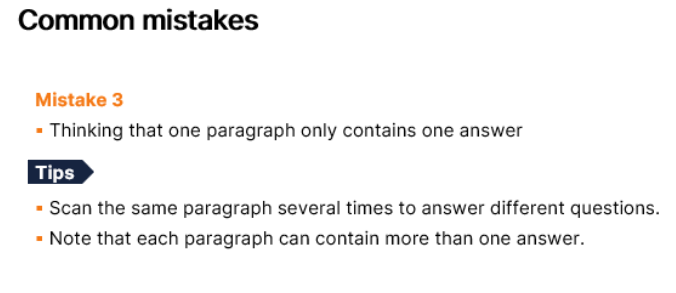 when choosing headings
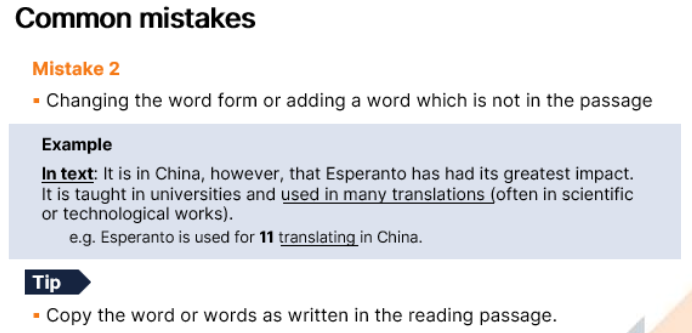
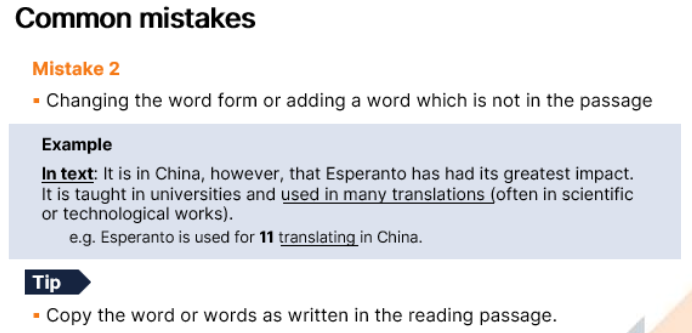
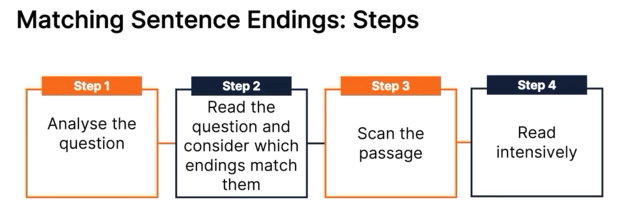
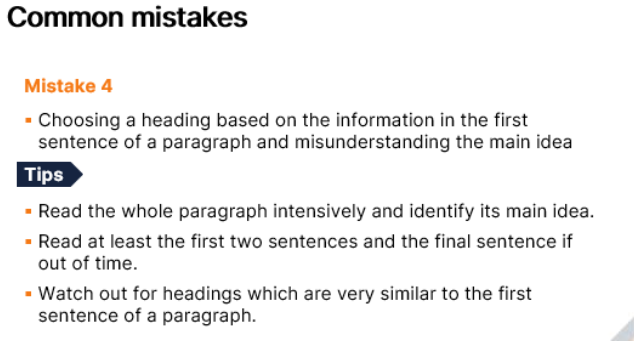 when sentence completion
Matching Headings
- be careful of plurals and singular
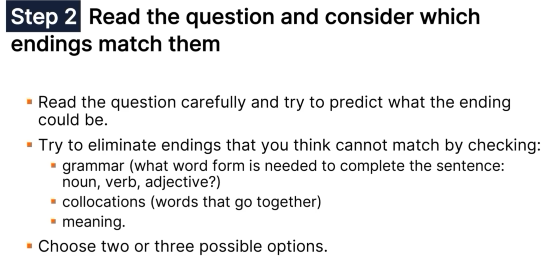
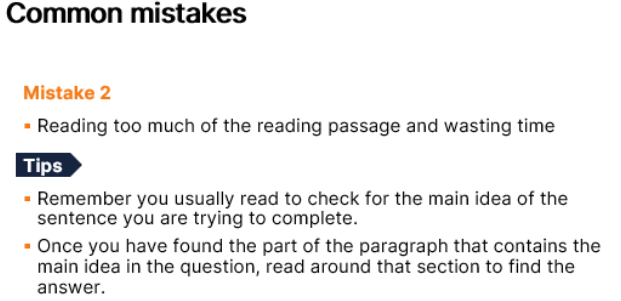
Matching Sentence Endings
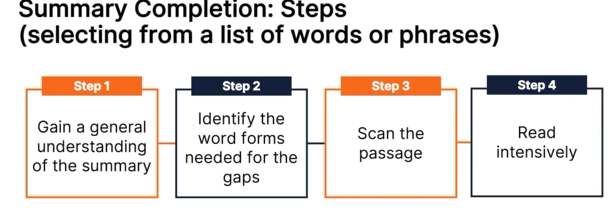
Summary Completion
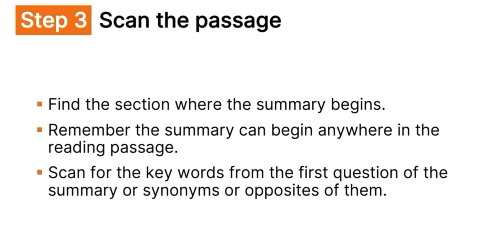
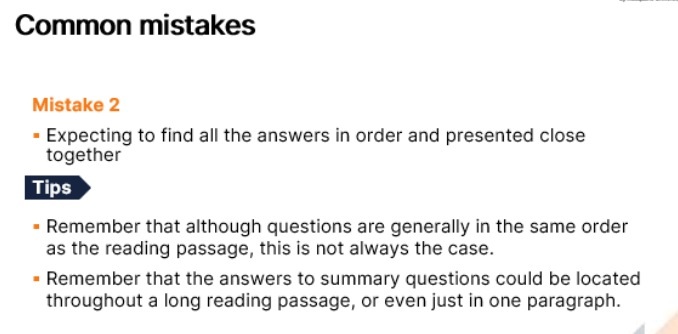
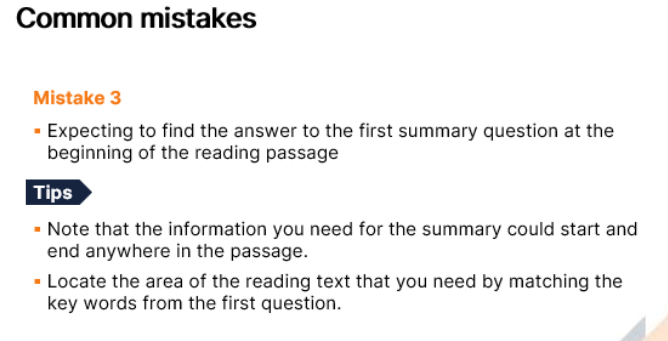
Note Completion
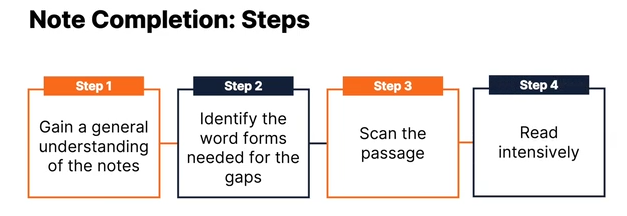
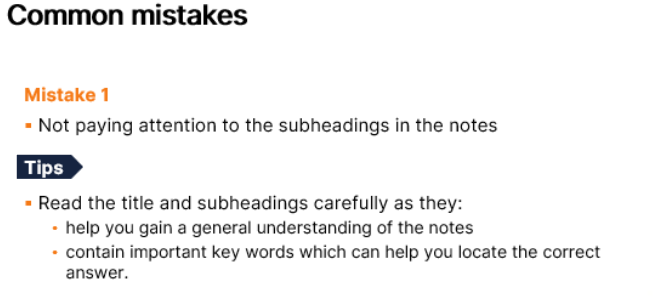
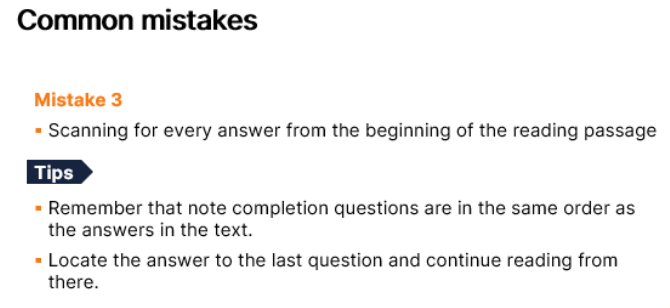
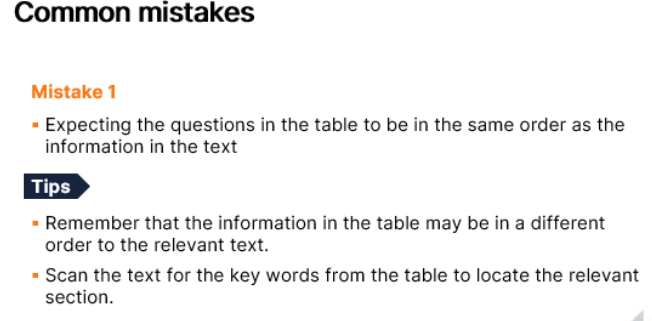
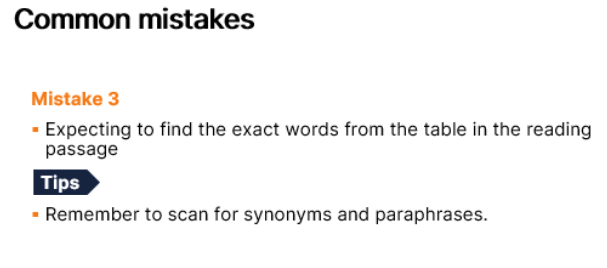
Table Completion
Flow-chart Completion
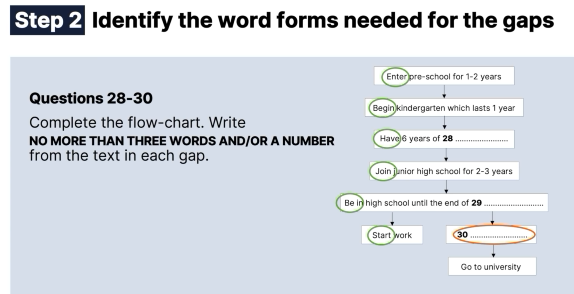
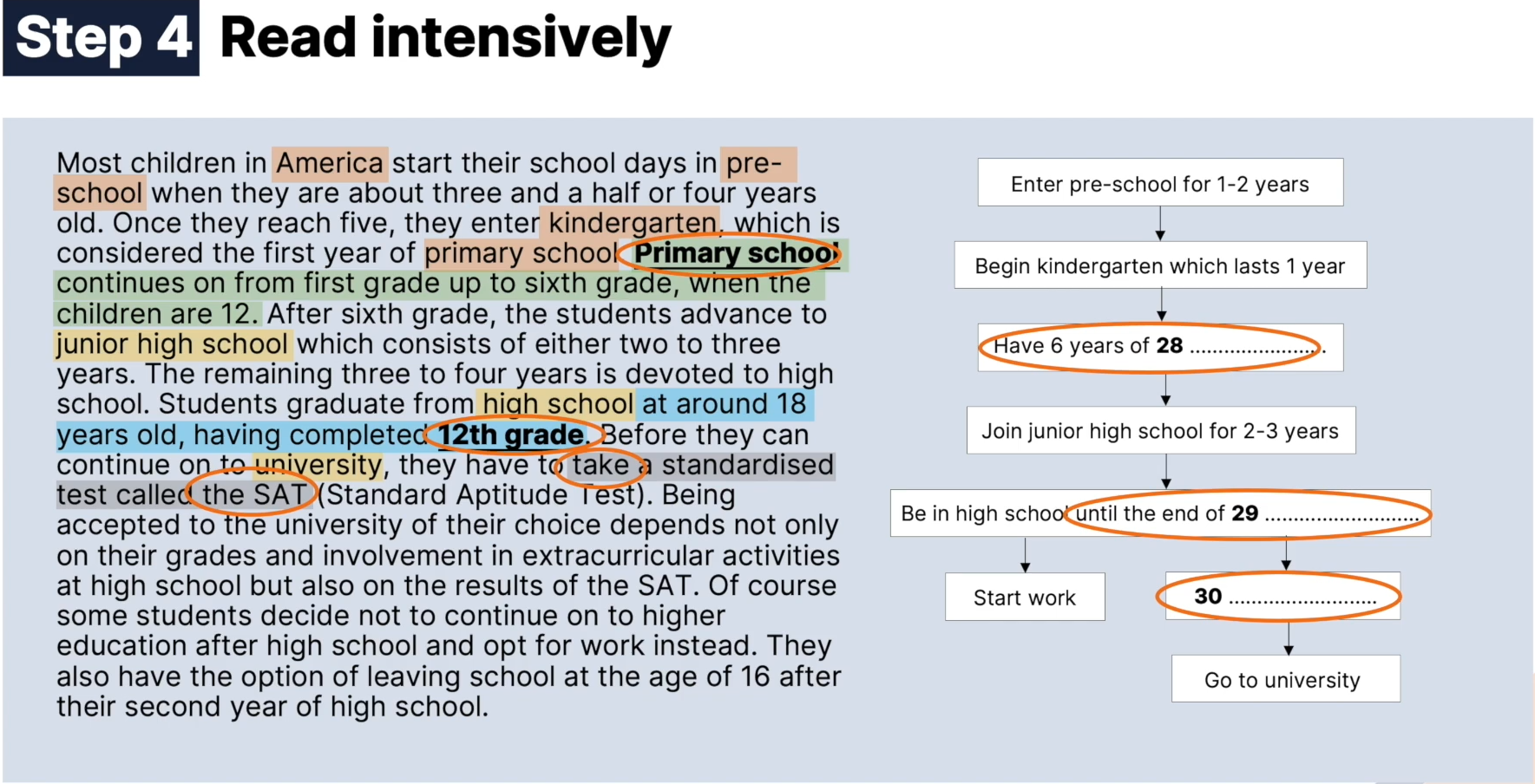
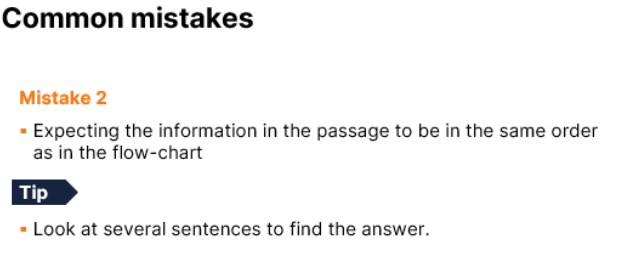
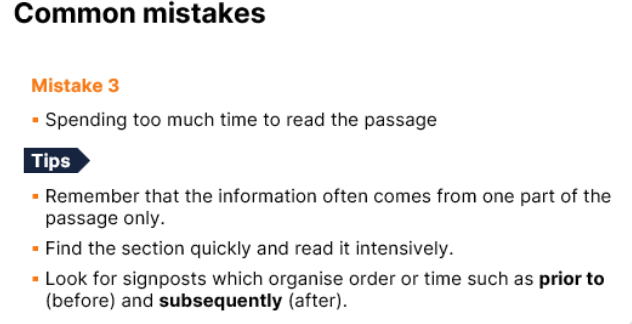
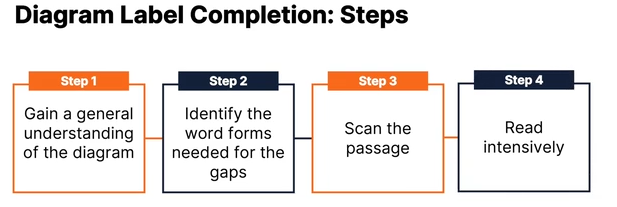
Diagram Label Completion